

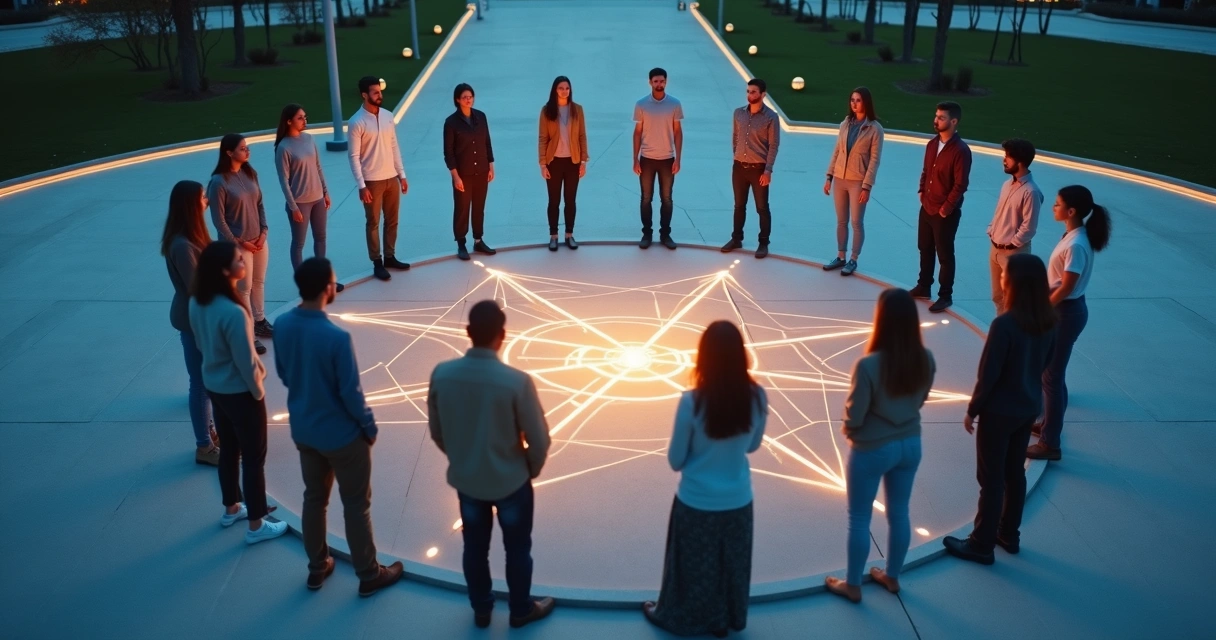
We have seen a quiet shift in how people think about change. For a long time, many groups tried to change systems with plans, rules, and metrics alone. Yet in real life, teams rarely move as one just because a policy says they should. People move when meaning becomes shared, when emotion becomes named, and when action becomes repeated together.
Group rituals foster systemic change because they turn shared values into shared behavior.
That is why this topic matters so much in 2026. The best current evidence does not treat rituals as decoration. It points to them as social patterns that shape trust, memory, belonging, and follow-through. When done well, they help groups shift from scattered intention to embodied practice.
What we mean by group rituals
When we say ritual, we do not mean something mystical or distant from daily life. We mean a repeated group action with clear form and shared meaning. It may be as simple as opening a meeting with one minute of silence, ending a week with public gratitude, or gathering after a hard event to reflect in a set order.
One team we observed started every Monday with the same three questions. What are we carrying. What matters most this week. Where do we need support. At first, people answered in a guarded way. After a few weeks, the room changed. Shoulders dropped. People listened. Problems surfaced earlier. The ritual did not solve everything. But it changed the field in which problems were faced.
Repeated form creates shared safety.
That simple fact helps explain why rituals can affect systems, not just moods. A system is made of patterns. Rituals are patterns by design.
Why rituals affect whole systems
Systemic change happens when relationships, feedback loops, and daily choices begin to shift together. Most groups fail here because they focus only on visible behavior. They forget that behavior is held in place by emotion, identity, and expectation.
Rituals work across these layers at once. They give structure to experience. They make invisible norms visible. They tell people, without long speeches, what this group honors and what it will no longer ignore.
We can see this in four ways:
They reduce uncertainty by giving a stable sequence.
They increase belonging through shared participation.
They mark transitions, which helps groups process change.
They reinforce values through repeated action, not just language.
In our view, this is why rituals often succeed where one-time workshops fail. A workshop may inspire. A ritual reorganizes expectation over time.
Readers interested in relational patterns and hidden group dynamics often find useful context in reflections on systemic constellations and in broader discussions of consciousness.
What the evidence says in 2026
By 2026, the research picture is clearer than it was a few years ago. We now have a stronger base showing that rituals are linked to meaning, cohesion, and prosocial behavior in groups.
A 2021 peer-reviewed paper in Organizational Behavior and Human Decision Processes found that performing group rituals increases the perceived meaningfulness of work. That rise in meaning then supports organizational citizenship behaviors and prosocial action. This matters because systems change when people begin doing more than the minimum. They help, repair, and contribute without being forced.
Another widely discussed summary from Harvard Business School research on rituals at work reported that teams with regular bonding activities and rituals saw about a 16 percent rise in how meaningful employees judged their work. We should pause on that. Meaning is not a soft side issue. It shapes whether people withdraw, cooperate, or take ownership.
When meaning rises in a group, the system gains more willing participation.
The academic picture also extends beyond workplaces. The Ritual Modes project at the University of Oxford’s Centre for the Study of Social Cohesion has built a framework for understanding how different forms of group ritual increase social cohesion and pro-group behavior across contexts. This supports what many practitioners have sensed for years. Ritual is not a side performance. It is a mechanism of social bonding.

Rituals and emotional regulation
There is another layer that often gets missed. Groups do not only think together. They regulate together. In tense periods, one person’s stress can spread fast. So can defensiveness, silence, and blame. Rituals can interrupt that spread.
A grounding practice before a conflict review, for example, changes the pace of reaction. A closing round after a demanding project helps people complete the experience instead of carrying unfinished tension into the next task. In simple terms, rituals help people digest collective experience.
This is where perspectives from psychology become useful. Group life is shaped by patterns that are not fully conscious. Repetition with awareness can soften those patterns and create better responses.
We have also noticed that rituals become stronger when they include both inner and outer elements. Not just words, but posture. Not just intention, but timing. Not just ideas, but embodied attention.
What makes a ritual work?
Not every repeated activity becomes a ritual with positive effect. Some routines are empty. Others feel forced. For a ritual to support systemic change, we believe a few conditions help.
It needs a clear purpose. People should know why it exists.
It needs consistency. The same basic form builds trust.
It needs emotional truth. People can sense when it is fake.
It needs fit. The form must match the group and the moment.
It needs reflection. A group should review what the ritual is actually doing.
If one of these is missing, the ritual may become performative. That is when people go through the motions but feel untouched. The form stays. The meaning leaves.
In leadership settings, this also connects with wider questions of ethics, recognition, and shared worth. That is why discussions on human valuation can add depth to how we design and hold rituals in groups.
Common mistakes groups make
We have seen a few mistakes repeat often. The first is making the ritual too long. If it drains energy, people resist it. The second is overexplaining it. A ritual should be understood, but not buried in theory. The third is imposing intimacy too fast. Trust grows by stages.
Good rituals are simple enough to repeat and meaningful enough to matter.
Another mistake is treating ritual as a fix for deeper structural harm. If a group has fear, injustice, or chronic confusion, a ritual alone cannot hide that for long. It can support repair, but it cannot replace honest action.

For readers who want a wider sense of how these ideas are being discussed and applied, material written by the editorial team can offer further perspective.
Conclusion
In 2026, the case is stronger than before. Group rituals help systems change because they shape the lived pattern of a group. They create pauses where reaction used to rule. They create meaning where routine had gone flat. They create belonging where isolation had become normal.
We do not think rituals matter because they are dramatic. We think they matter because they are repeatable, relational, and embodied. A system changes when enough moments inside it begin to carry a different signal. Ritual is one way to send that signal again and again, until the group starts to live it.
Change becomes real when it is practiced together.
Frequently asked questions
What are group rituals in organizations?
Group rituals in organizations are repeated shared practices with a clear structure and meaning. They can include opening check-ins, moments of silence, recognition rounds, team reflections, or closing practices after a project. Their value comes from repetition, shared attention, and the norms they reinforce.
How do group rituals drive systemic change?
They drive systemic change by shifting patterns across the group, not just in one person. Rituals shape how people relate, speak, listen, and respond under pressure. Over time, these repeated acts influence trust, belonging, accountability, and shared meaning, which are all part of how a system functions.
Are group rituals backed by research?
Yes. Research has linked group rituals with higher perceived meaning at work, stronger prosocial behavior, and better social cohesion. Studies published in peer-reviewed and academic settings have shown that repeated group practices can affect how connected people feel and how willing they are to contribute beyond formal duties.
How can I start a group ritual?
We suggest starting small. Choose one simple practice that fits a real group need, such as a two-minute opening reflection or a weekly gratitude round. Keep the format clear, repeat it consistently, and review its effect after a few weeks. If people feel more present and more honest, you are likely on the right path.
Do group rituals really improve teamwork?
Yes, they often do. Group rituals can improve teamwork by building trust, increasing shared meaning, and making communication more open. They do not replace clear roles or fair leadership, but they can support better cooperation by changing the quality of interaction inside the team.