


Stress often looks simple from the outside. A full calendar. A hard conversation. A restless night. Yet in our experience, stress rarely comes from one thing alone. It grows when our thoughts, feelings, and choices stop working together.
We see this often. A person says, “I am tired all the time,” but the deeper issue is not only workload. It may be inner conflict. One part wants rest. Another wants approval. Another wants control. That split creates pressure.
Stress rises when inner value and outer action drift apart.
Integrative value reflection methods help us slow down and ask better questions. Not only “What is happening?” but also “What matters here?” and “What in us is being ignored, crossed, or betrayed?” This is where stress can begin to soften.
Why stress becomes more than a physical reaction
We know stress has bodily signs. Tight shoulders. Fast breathing. Poor sleep. Short temper. But we also know that the body reacts to meaning. When we feel trapped, unseen, guilty, or divided, the body does not stay neutral.
Stress is not only pressure from outside. It is also tension between what we live and what we know to be true.
That is why two people can face the same event and react in very different ways. One feels challenged. The other feels shattered. The event matters, of course, but interpretation matters too. Personal history matters. Hidden loyalties matter. Values matter.
When we reflect on stress only at the surface level, we may miss the real source. We might change routines without changing direction. We might rest without resolving conflict. We might breathe deeply, yet still return to the same inner fracture.
This is why reflective methods have growing space in daily life. In fact, data on meditation and mindfulness use in the United States reports that 17.3% of adults practiced meditation in 2022, up from 7.5% in 2002. That rise tells us something simple. People are looking for ways to regulate themselves with more awareness.
What integrative value reflection looks like
Integrative value reflection is the practice of examining stress through multiple layers of human experience. We do not look only at symptoms. We also look at emotional patterns, personal meaning, relationships, and action.
In daily practice, this reflection often includes three movements:
- Noticing what we feel in the body and emotions
- Identifying which value is being protected, neglected, or violated
- Choosing an action that restores internal coherence
That may sound formal, but it is very human. We once saw a manager describe her stress as “too many emails.” After reflection, she realized the deeper pain was different. She was saying yes to demands that attacked her value of fairness. She gave attention to the loudest people and neglected the quiet team members who also needed support. Her stress was moral, not only mental.
Once she saw that clearly, her next step changed. She did not only reorganize her inbox. She reset response rules, protected time for thoughtful decisions, and felt less pressure almost at once.
When we name the value beneath the stress, our response becomes clearer and more stable.
Methods that help us reflect with more depth
Different people enter reflection in different ways. Some start with writing. Others need silence first. Others need to map relationships and recurring conflicts. The method matters less than the honesty of the process.
We often find these approaches useful:
- Journaling around a stressful event with questions about fear, duty, and truth
- Short meditation periods to calm reactivity before making decisions
- Reviewing repeated conflicts to spot hidden emotional patterns
- Looking at family or team dynamics that may intensify pressure
- Clarifying which values are non-negotiable in the current moment
Those who want to deepen emotional pattern work may find support in themes related to psychology. For those who need inner steadiness before reflection, practices linked to meditation can help settle the mind enough to see clearly.
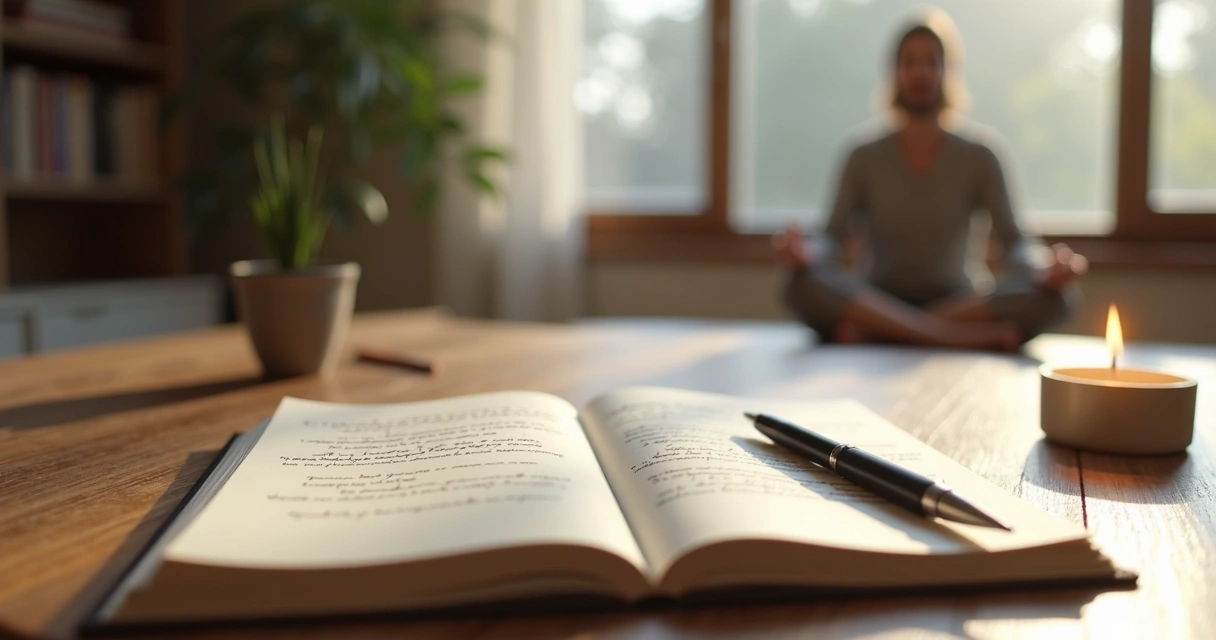
How values reduce physiological stress
Reflection is not just a pleasant idea. It can affect the stress response in measurable ways. A study on a values-clarification intervention and cortisol response found that students who engaged in this type of reflection showed lower cortisol reactivity during a social stress task than those in the control group.
This matters because cortisol is not just a feeling. It is part of the body’s stress signaling. When value reflection lowers that reactivity, it suggests that meaning-centered methods can help regulate the body as well as the mind.
We should be careful here. Reflection does not erase all stress. It does something more realistic. It reduces unnecessary internal struggle. It helps us stop fighting ourselves while facing life.
Clarity calms the body.
For many of us, that is the missing piece. We are not only overloaded. We are internally misaligned.
Bringing relationships into the picture
Stress rarely lives in isolation. It moves through families, teams, and shared habits. We may carry pressure that did not start with us. We may repeat roles that keep us overresponsible, silent, or emotionally unavailable. When that happens, private stress has a systemic side.
This is why some people gain relief when they reflect on relational structure, not only personal emotion. Areas connected to systemic constellation can support this wider view. We can begin to ask: What role are we repeating? What burden are we carrying that is not fully ours? Which bond makes it hard to choose peace?
At the same time, stress reflection should not become self-absorption. Values also connect to responsibility, impact, and the worth we assign to people and choices. Themes related to human valuation help widen that lens.
And when we want to understand the link between attention, identity, and lived meaning, deeper reading on consciousness offers another path.

How to start without making it hard
Many people avoid reflection because they think it must be long, abstract, or perfect. We do not see it that way. A useful method can begin in ten minutes if the questions are honest.
You can start with a simple sequence:
- Pause and name the stressful moment.
- Write what you felt in the body and emotion.
- Ask which value felt blocked, threatened, or ignored.
- Notice whether the stress belongs only to the present, or also to an older pattern.
- Choose one action that restores coherence today.
This last step matters. Reflection without action can become mental noise. Action brings dignity back into the process. Sometimes the action is a boundary. Sometimes it is a conversation. Sometimes it is rest without guilt.
Small aligned actions often reduce stress more than large forced changes.
Conclusion
Managing stress through integrative value reflection methods means treating the person as a whole. We are not only managing symptoms. We are listening for conflict, meaning, and direction. Stress begins to shift when our emotions are heard, our values are named, and our actions become more honest.
We have seen that calm does not always arrive through escape. Often, it arrives through alignment. Quietly. Clearly. One true step at a time.
Frequently asked questions
What is integrative value reflection?
Integrative value reflection is a way of looking at stress through body signals, emotions, beliefs, relationships, and choices at the same time. It asks what matters to us, where we feel divided, and how we can act with more inner coherence.
How does it help with stress?
It helps by reducing inner conflict. When we identify the value beneath a stressful reaction, we can respond with more clarity and less confusion. This often lowers emotional overload and can even soften physical stress responses.
Who can use these methods?
These methods can be used by adults in many settings, including personal life, leadership, family decisions, and team relationships. They are useful for anyone willing to reflect honestly and take small, consistent actions.
Are results immediate with these methods?
Sometimes relief comes quickly, especially when stress is linked to a clear unresolved conflict. Still, deeper patterns may take time. The process usually works best when practiced with patience, regularity, and real-life application.
Where can I learn these techniques?
You can learn them through guided reflective practices, meditation-based self-observation, structured emotional work, and study in areas such as consciousness, psychology, relational systems, and human values. A steady learning path tends to bring better results than rushed exposure.